Hope Belongs to the Middle
Hope is the virtue of the man who is not home yet. A man in heaven has no need for it because he possesses the thing he hoped for. A man in hell has no possibility of it. Hope belongs to the middle – to the wayfarer, to the Church militant, to every one of us still making the journey.
Joseph Pieper calls hope the proper virtue of the “not yet.” That phrase captures something deeply Catholic. At Mass we already participate in heaven. We receive the Lord himself in the Eucharist. And yet we do not yet behold the beatific vision. We live inside that tension: already, but not yet. Hope is what lets a man live there without losing his head.
The Four Marks of What We Hope For
Aquinas gives us four marks of hope’s object. What we hope for must be good, future, arduous, and possible. You need all four. If it is not good, it is not worth wanting. If you already possess it, there is nothing left to hope for. If it requires no difficulty, it is not really the object of hope. And if it is impossible, you are not hoping; you are fantasizing.
That helps explain why our ordinary use of the word can be pretty loose. We say we hope it does not rain or hope the Cowboys win the Super Bowl – hypothetically speaking, because the thing does have to be possible. Natural hope rests on circumstances, probabilities, and human ability. Supernatural hope rests on the goodness and providence of God himself.
The great object of Christian hope is eternal happiness with God. It is future. It is unquestionably good. It is arduous because we must cooperate with grace, live the sacramental life, repent, and remain in God’s friendship. But it is possible because Christ has already done the saving work. We are not looking at God and wondering whether he is capable of saving. We are looking forward to the fulfillment of what he has promised.
Hope Is Looking Forward, Not Merely Wondering
That distinction matters. In common speech, “I hope” often means “I guess we will find out.” The theological virtue is not religious uncertainty wearing a nicer shirt. It is confidence anchored in another person – in God’s character, God’s promise, and God’s completed work in Christ.
Even the souls in purgatory can hope. Their final happiness is still future, and they have not yet attained it, but it is possible and certain in a way our weather forecast is not. Their hope has an object sturdy enough to bear the weight.
This does not make the Christian life easy. Arduous is built into the definition. Hope is not optimism, positive vibes, or the expectation that the next week will be comfortable. It is the settled confidence that the difficulty in front of you is not the final word.
The Winning Side
We end the show by saying that we are on the Lord’s team – the winning side. It is a funny line, but it is also a hopeful mantra. The victory does not depend on our ability to arrange every circumstance. It rests on Christ.
So raise your glass. The good we seek is still ahead. The road is hard. The promise is possible because God is good. That is not wishful thinking. That is hope.
Listen to the Full Episode
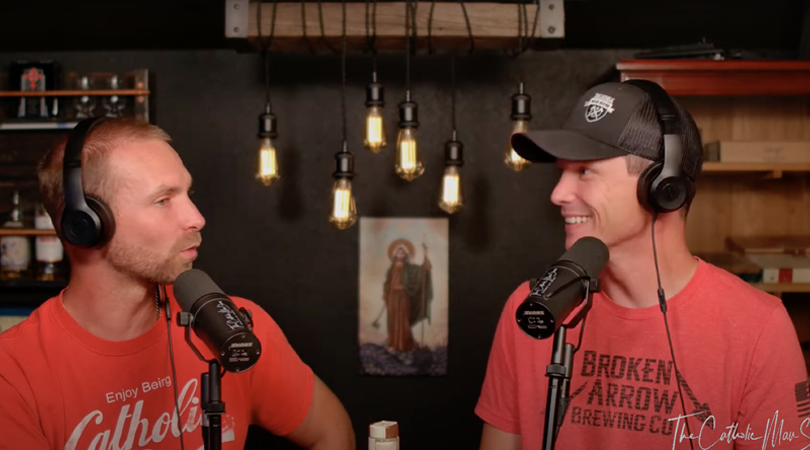
Listen to the full TCMS conversation on the theological virtue of hope, including Aquinas, Joseph Pieper, purgatory, and the difference between natural and supernatural hope: Hope is for the Man in the Middle on Spotify