A Long Look Feels Strange Now
A man who stands in front of one painting for forty minutes looks a little suspicious in a museum. Father Bonaventure knows this from experience. He assigned students to sit with a painting for thirty to forty minutes, then did the assignment himself. There he was in a robe, quietly staring, while other people wondered whether he was all right. The oddness is part of the point. We are used to passing through beautiful things quickly enough to say we saw them.
The Painting Did Not Need to Entertain Him
The painting was a snowy scene by Henry Twachtman. At first it was simply cold. After roughly thirty minutes of sustained attention, its tone changed for Father Bonaventure. He began to see warmth. A house appeared in the scene, something he had not noticed before. The paint did not rearrange itself. He had become patient enough to receive what was there. In his own words, he changed, and the painting changed.
Beauty Is Received, Not Forced Open
That difference matters. Much of life trains us to take things apart, identify the mechanism, and make the thing yield a result. There is a proper place for that. It is not how art works. Art has a revelatory quality because it gives something to a person who is open to it. You do not get there by putting beauty on the rack and demanding its secrets. You let it do its work on you.
Prayer and Beauty Share a Lesson
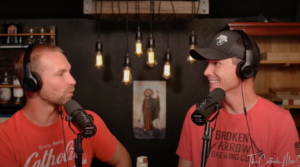
The earlier conversation about prayer runs right into this one. Both prayer and beauty can be treated as unproductive if we only value what we can take away and use. Yet a great work of art, a beautiful park, or a quiet hour with God may be worth being around before it supplies a lesson. The hosts recalled seeing Michelangelo’s David in person and being caught off guard by its grandeur, size, and detail. There was no test at the exit. Being there had already done something.
Practice Attention Without Making It Another Project
Try the assignment without turning it into a new performance metric. Go before a painting, a church, a piece of sacred music, or a place of real natural beauty. Stay longer than your first impulse allows. Notice the urge to check out or move on. Then give the thing before you a little more time. The goal is not to manufacture an insight. It is to recover the human capacity to attend, receive, and be changed by what is good.
Keep the Question Close
The lesson is not reserved for people who know the names of painters or can explain an art movement at dinner. The hosts were clear that surprise is available to the ordinary viewer. You can stand before something beautiful without first proving that you are qualified to receive it. A man who learns to stay with a painting may also become slower to rush past his children, his wife, a church, or the world God has made. Attention is not magic, and it will not turn every moment into revelation. It does make room for reality to be more than an object to use. That alone is a needed correction for a life lived at high speed.
The conversation does not offer a trick for getting control of life. It asks for a more honest response to what is in front of you: give God the time, receive what is beautiful, and do the good that belongs to you. That is enough work for one day, and it is work worth returning to tomorrow.
Listen and Support